
Every commercial building, manufacturing plant, and office complex functions like a living ecosystem. When everything runs smoothly, the people inside hardly notice the background operations keeping them safe, clean, and comfortable. But the second a critical system breaks or a security issue occurs, operations stall, productivity drops, and client trust takes an immediate hit.
Thank you for reading this post, don't forget to subscribe!For years, many organizations handled physical security and property maintenance in total isolation. One company guarded the entrance while another serviced the HVAC system or handled janitorial duties. In practice, this setup creates operational blind spots. A security guard might notice a faulty door latch or a leaking pipe during a late-night patrol, but without a direct channel to the maintenance team, that detail stays trapped in a logbook until it turns into an expensive repair.
Modern businesses are moving away from this fragmented approach. By bringing security and facility management services under one clear framework, organizations eliminate vendor confusion and build a safer, more efficient workplace. Instead of juggling multiple contracts, leadership gains a single, accountable team focused on protecting assets and keeping daily operations running without a hitch.
This guide outlines how integrated site management works on the ground, why breaking down operational silos protects your bottom line, and how to structure a resilient property management strategy.
The True Cost of Fragmented Building Operations
Bridging the Gap Between Security and Maintenance
When property management is split across separate vendors, simple tasks often get delayed. If an electronic access gate fails, is it a hardware problem for maintenance technicians or a breach risk for the guard team? While two different contractors debate who should fix it, your building remains exposed.
Integrating security and facility management services removes that back-and-forth. Frontline guards and facility technicians work under unified guidelines and share the same reporting channels. When a problem arises, it is flagged, assigned, and fixed right away.
Turning On-Site Staff into Active Monitors
A unified approach changes how staff approach their daily duties. Instead of sticking strictly to narrow roles, team members are cross-trained to notice details that impact both safety and building upkeep:
-
- Security Officers: Beyond managing access gates, officers check for safety hazards, blocked fire exits, broken lighting, or early signs of equipment leaks during routine walkthroughs.
-
- Facility Technicians: While servicing air handlers or electrical panels, technicians stay mindful of access protocols and keep an eye out for unescorted visitors in restricted areas.
-
- Site Supervisors: Managers review a single daily report combining access logs, maintenance requests, and safety checks, giving leadership total visibility over site health.
Core Pillars of Comprehensive Facility Operations
1. Physical Security and Threat Prevention
Site protection involves much more than placing a guard at the front desk. It requires a layered defense tailored to your building’s daily traffic and specific operational needs.
-
- Access Control: Officers handle visitor sign-ins, inspect incoming deliveries at loading docks, and enforce credential policies so only authorized staff enter sensitive zones like server rooms.
-
- Active Patrols: Guards conduct structured, regular patrols using modern tracking tools to cover every corner of the property, preventing unauthorized entry and spotting maintenance issues early.
-
- Emergency Response: Trained personnel follow clear escalation steps during unexpected events—whether managing a physical intrusion, handling an unruly visitor, or directing a building evacuation.
2. Infrastructure Care and Environmental Health
A facility is only as reliable as the systems operating inside it. Proactive maintenance keeps equipment running efficiently and avoids sudden, costly breakdowns.
-
- Preventative Maintenance: Regular servicing of HVAC systems, emergency power generators, and plumbing prevents mechanical failures and extends the life of expensive machinery.
-
- Janitorial & Hygiene Services: Detailed cleaning and sanitization schedules maintain a healthy workplace, reduce seasonal illnesses among employees, and project a professional image to visiting clients.
-
- Energy Management: Monitoring building automation systems ensures heating, cooling, and lighting run only when needed, lowering energy bills without sacrificing indoor comfort.
3. Compliance and Life-Safety Management
Keeping up with local fire codes, occupational health rules, and structural safety standards is essential to protect occupants and avoid steep regulatory fines.
-
- Fire Safety Checks: Staff conduct regular inspections of fire extinguishers, alarm systems, sprinklers, and emergency exit signage.
-
- Evacuation Planning: Teams establish clear evacuation routes and run periodic drills so everyone on-site knows what to do in an emergency.
-
- Detailed Record-Keeping: Digital logs track every safety audit, patrol route, and repair ticket, making sure your organization is always ready for official inspections.
How Integrated Site Management Works in Practice
Switching from multiple scattered contractors to a streamlined operational model follows four straightforward steps:
-
- Site & Risk Audit: Operational experts walk your property to assess entry points, inspect aging equipment, review traffic patterns, and pinpoint potential safety gaps.
-
- Custom Deployment Plan: Based on the audit findings, a tailored service strategy is designed. This outlines officer posts, maintenance schedules, cleaning routines, and escalation paths matched to your operating hours.
-
- Standard Operating Procedures (SOPs): Clear rules are written specifically for your facility. Cross-training ensures guards know how to handle mechanical emergencies (like a burst water pipe), while maintenance staff understand security protocols.
-
- Performance Reviews: Work quality is tracked against specific Service Level Agreements (SLAs). Periodic reviews use real-world data to refine schedules and staffing as your business grows.
The Measurable Business Impact
Consolidating your property operations brings distinct, practical benefits to business leadership:
-
- Faster Response Times: Shared communication between guards and technicians cuts response times during on-site emergencies by up to 40%.
-
- Fewer Major Equipment Failures: Routine preventative care catches wear and tear early, reducing major mechanical breakdowns by 25% to 30%.
-
- Lower Administrative Work: Working with a single provider rather than multiple vendors reduces invoice processing and contract management time by up to 35%.
Beyond direct savings, professional site management protects your brand’s reputation. A major security breach or extended facility outage damages client trust quickly. Reliable management acts as a dependable safeguard for your business.
Common Misconceptions About Facility Management
Myth 1:”Choosing the Lowest Bid Always Saves Money
Hiring security or maintenance providers based solely on the lowest hourly rate often backfires. Low bids frequently lead to high staff turnover, minimal training, and missed safety hazards. Real savings come from preventing major equipment failures, avoiding security incidents, and extending asset lifespans Security Guard Services in India not from cutting corners on basic service quality.
Myth 2: Security Cameras Can Completely Replace On-Site Staff”
Surveillance technology and smart sensors offer great visibility, but a camera cannot stop a trespasser, manage a physical emergency, or repair a broken valve. Technology works best as an aid for trained, on-site personnel who can act immediately when an issue arises.
Building Long-Term Enterprise Value
Managing several independent vendors creates unnecessary administrative friction, inconsistent work quality, and confusing accountability when things go wrong. Partnering with a dedicated service provider centralizes oversight, ensuring every guard, technician, and cleaner works toward the same high standards.
Regulations regarding workplace health, environmental standards, and duty of care grow stricter every year. Having an experienced partner handle your risk audits, maintain safety systems, and keep complete records ensures your operations stay compliant while protecting your employees, guests, and physical assets.
Frequently Asked Questions
What are integrated security and facility management services?
Integrated security and facility management services combine physical guarding, access control, technical building maintenance, janitorial care, and safety compliance under one unified management system. This approach eliminates communication gaps, lowers administrative costs, and keeps commercial properties running reliably.
How does combining security and facility care improve safety?
Unifying these teams means every staff member is cross-trained to protect the facility. Security guards look out for technical hazards like water leaks or exposed wiring during patrols, while maintenance technicians stay alert for access breaches and credential violations.
Why should a company move away from using multiple separate vendors?
Working with a single service partner eliminates vendor miscommunication, speeds up emergency response times, cuts down on paperwork, and gives management one clear point of contact for all property operations.
What types of properties benefit most from these services?
Commercial office buildings, manufacturing plants, healthcare facilities, shopping centers, educational institutions, and residential complexes benefit significantly. Any site with high daily foot traffic and complex infrastructure gains efficiency from unified operations.
How do facility management services reduce business risk
Professional management reduces operational risk by enforcing compliance with local fire codes, testing life-safety systems, conducting routine audits, and maintaining clear digital logs. This proactive approach prevents workplace accidents, cuts unexpected downtime, and protects organizations from legal liability.
Conclusion: Securing Your Operations for the Long Term
Relying on scattered, outdated vendor models introduces unnecessary costs and operational risks. Integrating your physical protection and property maintenance turns Security Guard Services in Indiadaily site care into a true strategic advantage—one that protects your workforce, extends the life of your equipment, and preserves enterprise value.
Partnering with an experienced, professional teamSecurity Guard Services in India provides the peace of mind that your facilities remain secure, fully compliant, and running at peak performance every day.
Partner with GTCS Allied
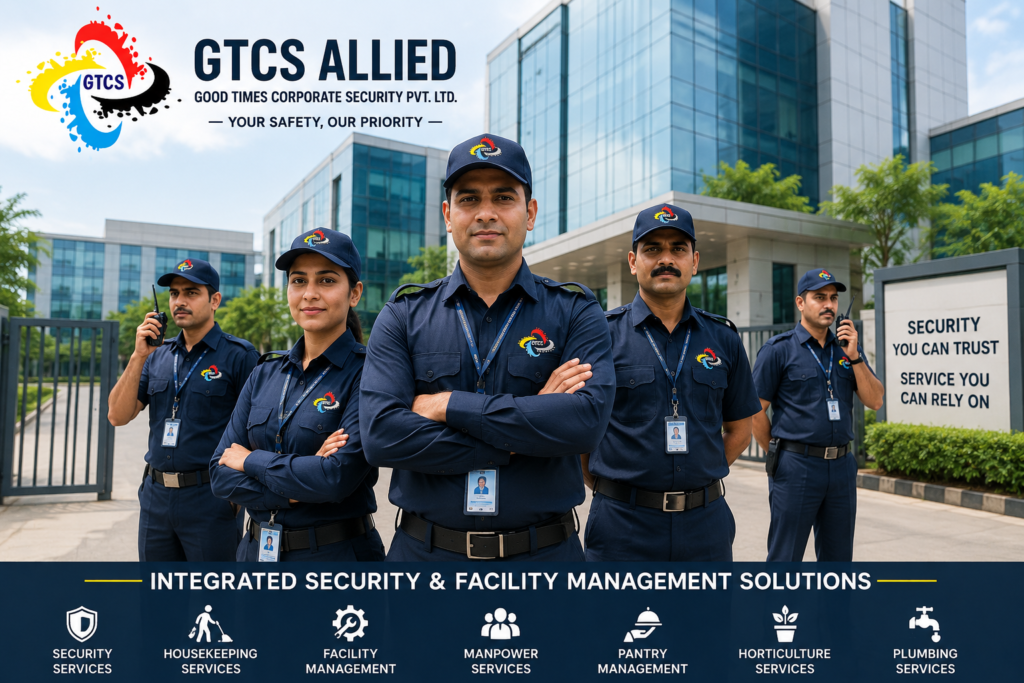
Good Times Corporate Security Pvt. Ltd. (GTCS Allied) delivers dependable physical security and facility support solutions designed for modern corporate, industrial, and institutional environments.
-
- Serving Clients Across India Head Office: A-15 & A-16, Keshopur Industrial Area, Vikaspuri, New Delhi – 110018
-
- Direct Phone: +91 9810008576 | +91 9810689733
-
- Email: hr@gtcsallied.com
-
- Website: gtcsallied.com
Get in touch with our team today to schedule a site evaluation and learn how an integrated service model can improve your property management strategy.